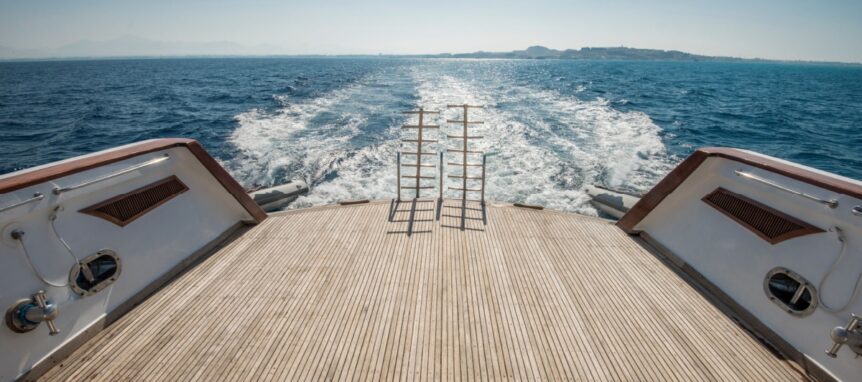
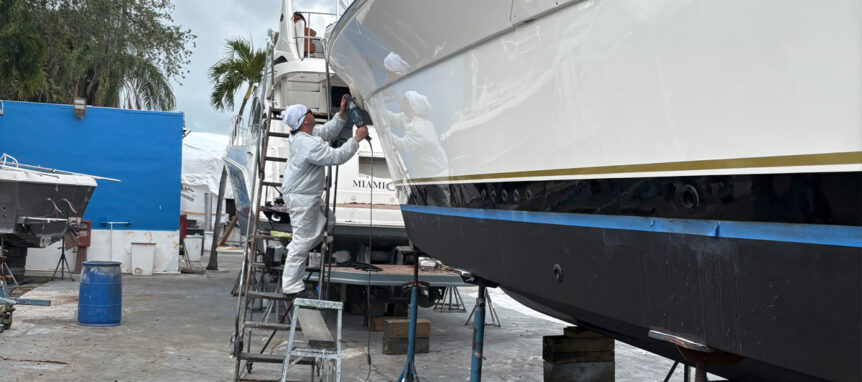
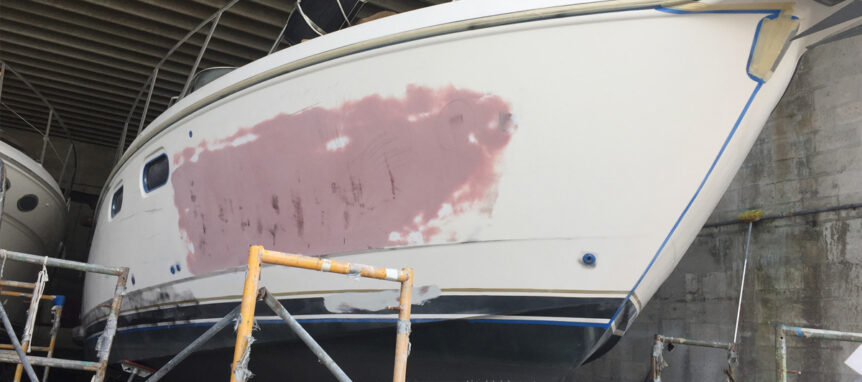
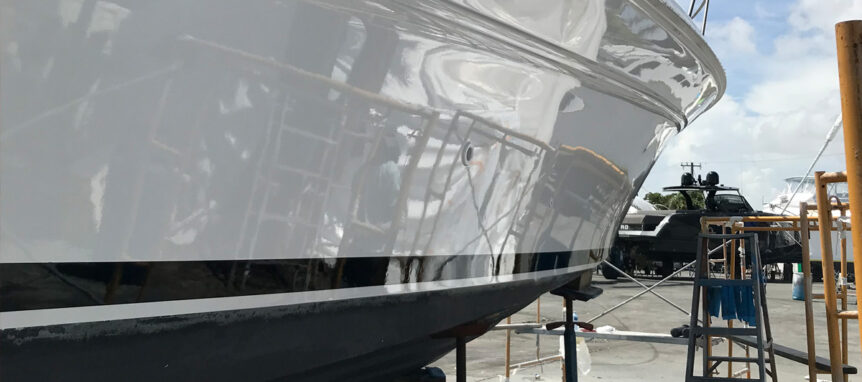
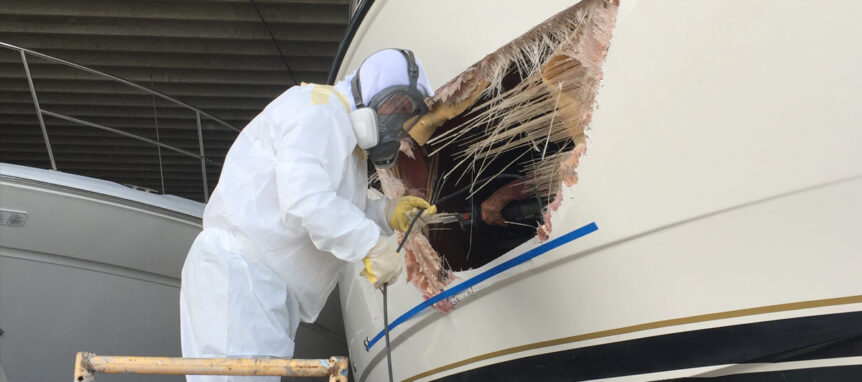
Fiberglass is the foundation of most modern yachts. It provides the strength, buoyancy, and durability needed to endure constant movement and challenging marine environments. While fiberglass is known for its resilience, it is not immune to wear, impact, or moisture damage. The key to protecting your yacht is recognizing early …
Teak Restoration vs. Replacement: How to Revive Your Yacht’s Woodwork
Teak is a signature feature on many yachts, admired for its warmth, natural oil content, and durability in harsh marine environments. From decks and steps to trim and cabinetry, it offers unmatched beauty and performance. But over time, constant exposure to UV rays, saltwater, and foot traffic takes its toll. …
What to Expect When Repainting Your Yacht: A Step-by-Step Guide
A fresh paint job is one of the most impactful upgrades you can make to your yacht. It not only enhances visual appeal but also protects against UV rays, saltwater, and general wear and tear. Repainting a yacht, however, is not a quick weekend project. It’s a carefully executed process …
Common Causes of Fiberglass Damage—and How to Repair Them Right
Fiberglass is the structural backbone of most modern yachts. Lightweight, strong, and resistant to corrosion, it’s the preferred material for hulls, decks, and topsides. But despite its durability, fiberglass isn’t immune to damage. From hard impacts to long-term water exposure, there are a number of ways this critical material can …
The Importance of Bottom Painting: Performance, Protection, and Fuel Efficiency
Every yacht owner understands the value of a clean, well-maintained hull. While topside finishes tend to get the spotlight, what lies beneath the waterline plays an equally critical role in your vessel’s long-term performance. Bottom painting, also known as antifouling, is not just cosmetic—it’s an essential part of protecting your …