
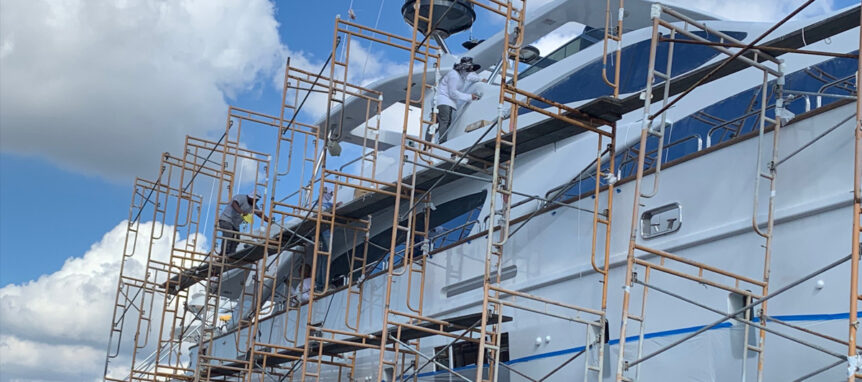
Saltwater is both a yacht’s natural environment and its greatest long-term threat. While modern yachts are engineered to withstand marine conditions, constant exposure to salt, sun, and moisture gradually wears down even the most well-built vessels. Over time, saltwater accelerates corrosion, weakens finishes, and contributes to hidden structural issues that can become costly if left unaddressed. Understanding how saltwater impacts your yacht, and how to prevent damage, is essential to protecting your investment and extending its lifespan.
At Horizon Marine Services, we’ve spent decades repairing and restoring yachts affected by saltwater exposure. With the right maintenance strategy and professional care, much of this damage can be prevented before it compromises performance or safety.
Corrosion of Metal Components
Saltwater is highly corrosive, especially to metal components exposed below and above the waterline. Propellers, shafts, trim tabs, rails, fasteners, and fittings are all vulnerable to oxidation and pitting. Even stainless steel, commonly used in marine applications, can corrode over time when salt residue is allowed to build up.
Once corrosion begins, it can weaken structural components and affect performance. Regular rinsing helps, but professional cleaning, polishing, and protective coatings are often required to slow the corrosion process. Services such as Prop Speed application and metal polishing play a key role in preserving underwater and exposed metal parts.
Damage to Paint and Gelcoat Finishes
Salt residue left on painted or gelcoated surfaces attracts moisture and accelerates oxidation. Over time, this leads to fading, chalking, and dullness. As the protective layers break down, the underlying materials become more susceptible to cracking and wear.
Professional detailing and paint maintenance help remove salt buildup and restore protective coatings. Waxing, polishing, and ceramic treatments form a barrier that reduces direct exposure to salt and UV rays. Without this protection, finishes deteriorate more quickly, increasing the likelihood of repainting or refinishing sooner than expected.
Fiberglass and Structural Wear
Saltwater intrusion can also affect fiberglass structures, especially when combined with moisture trapped beneath surfaces. Over time, saltwater can enter through cracks, worn sealant, or improperly bedded hardware. Once inside the laminate, moisture can contribute to delamination, blistering, and weakened core materials.
Early detection is critical. Professional inspections during detailing, haul-outs, or routine service can reveal early warning signs before structural damage spreads. Addressing small cracks or compromised areas early helps avoid extensive fiberglass repairs later.
Effects on Teak and Woodwork
Teak is prized for its durability, but saltwater exposure still takes a toll over time. Salt dries out natural oils, leading to cracking, splintering, and discoloration. If not properly cleaned and conditioned, teak can age prematurely and lose its structural integrity.
Professional teak care removes salt residue without over-drying the wood. Proper sanding, conditioning, and finishing help preserve the natural oils and protect the surface from further damage. Routine maintenance significantly extends the life of teak decks, steps, and trim.
Running Gear and Performance Loss
Saltwater contributes heavily to fouling on underwater components. Marine growth attaches quickly to unprotected props, shafts, and hulls, creating drag that reduces speed and fuel efficiency. As buildup increases, engines must work harder to maintain performance, leading to higher fuel consumption and increased mechanical strain.
Bottom painting and Prop Speed services are among the most effective ways to combat saltwater-related performance loss. These coatings prevent growth from bonding to surfaces, keeping running gear clean and hydrodynamic throughout the season.
Preventative Maintenance Is the Best Defense
The most effective way to protect your yacht from saltwater damage is consistent professional maintenance. Routine detailing removes salt residue before it causes oxidation. Regular inspections identify small issues before they escalate. Protective coatings shield surfaces from environmental exposure, and professional repairs restore compromised areas with long-term durability in mind.
Saltwater damage is gradual, which makes it easy to overlook until problems become obvious. By that point, repairs are often more complex and costly. A proactive approach ensures your yacht remains reliable, efficient, and visually impressive year after year.
Protecting Your Yacht for the Long Term
Saltwater is unavoidable, but damage doesn’t have to be. With expert care, proper coatings, and routine service, your yacht can thrive in its marine environment instead of suffering from it. At Horizon Marine Services, we provide comprehensive solutions designed to protect every part of your vessel, from hull to hardware.
Whether you need detailing, fiberglass repair, bottom painting, or Prop Speed application, our team is here to help you stay ahead of saltwater damage and enjoy your time on the water with confidence.
Contact Horizon Marine Services today to schedule service and let our experienced team help preserve your vessel’s performance, appearance, and value for years to come.